
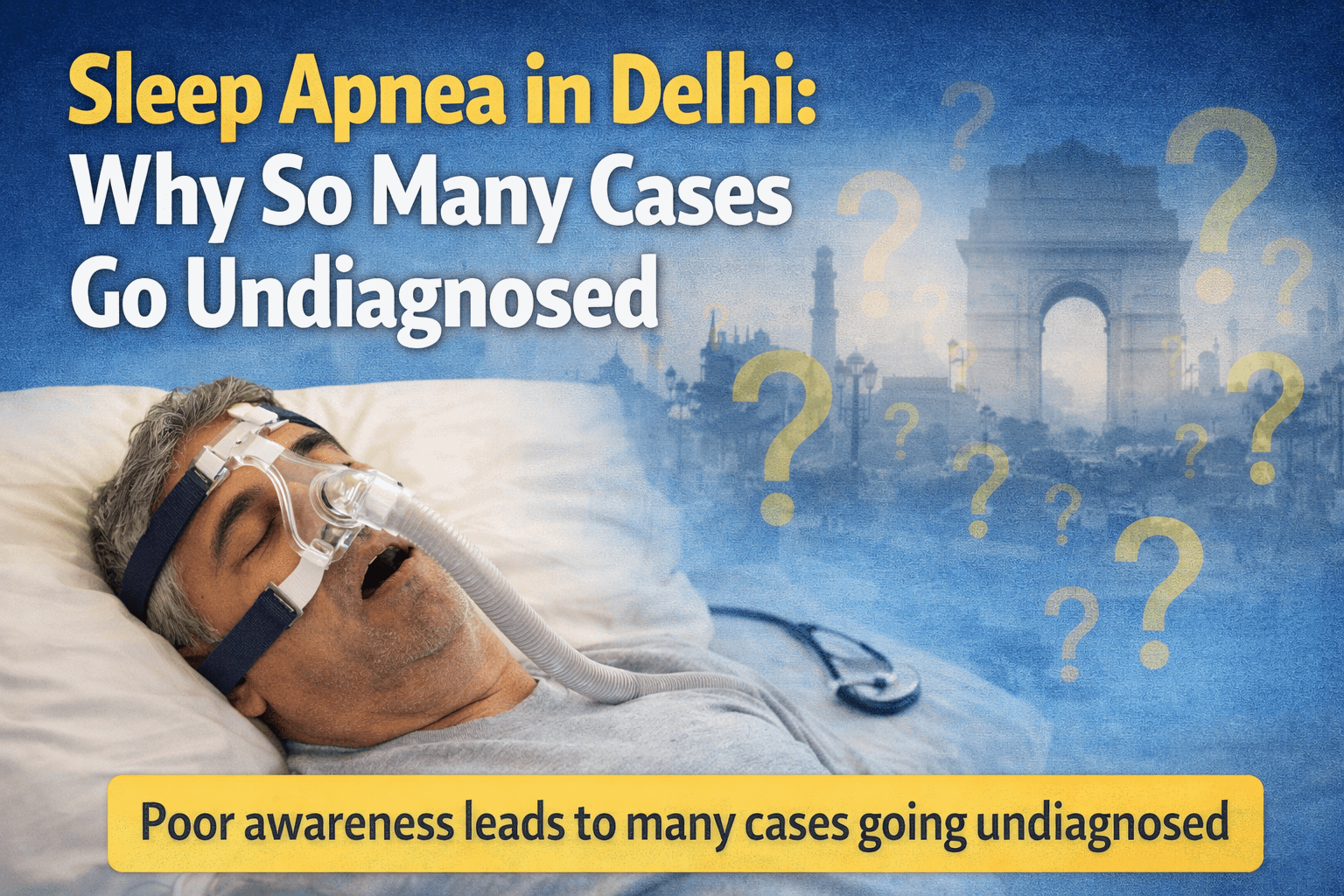
There is a quiet health crisis unfolding across Delhi — and most people living through it have absolutely no idea. They wake up tired every single morning. They reach for their third cup of chai before noon. They snap at their children, lose focus at work, and fall asleep the moment they sit down in the evening. They have been told they snore. They put up with headaches that nobody can quite explain. And through all of it, they assume this is just what life feels like — busy, stressful, exhausting.
What they do not know is that a significant number of them have obstructive sleep apnea — a serious, diagnosable, and very treatable medical condition. And they have never been told.
At Pulmovista Clinics, Dr. Dixit Kumar Thakur sees this pattern repeatedly. Patients arrive having spent years — sometimes over a decade — managing the symptoms of undiagnosed sleep apnea without ever addressing the root cause. The relief on their faces when they finally get answers is something the clinic team never takes for granted.
This article is for anyone in Delhi who suspects something is wrong with their sleep but has not yet taken the step of getting it checked.
The Scale of the Problem
Sleep apnea is far more common than most people realise. Studies estimate that a large proportion of adults with moderate to severe obstructive sleep apnea remain completely undiagnosed — and in a city like Delhi, where awareness of sleep medicine is still developing, that number is likely even higher.
The reasons are straightforward. Snoring is normalised. Fatigue is blamed on work pressure or the city’s relentless pace. Symptoms like morning headaches, mood changes, and difficulty concentrating are attributed to everything from dehydration to stress to screen time. Nobody thinks to look at what is happening during the hours when they are supposed to be resting.
Meanwhile, the heart is working harder than it should. Blood pressure is creeping upward. Blood sugar regulation is quietly suffering. And every morning, the person wakes up thinking they just need a better mattress or an earlier bedtime.
What Is Actually Happening During Sleep
To understand why sleep apnea is so easy to miss, it helps to understand what actually happens during an episode.
When you fall asleep, the muscles throughout your body relax — including the muscles that keep your airway open. In people with obstructive sleep apnea, the soft tissues at the back of the throat collapse inward too much, partially or completely blocking the passage of air. Breathing slows, becomes shallow, or stops altogether.
Within seconds, the oxygen level in the blood begins to drop. The brain detects the drop and sends an urgent signal — wake up, reopen the airway, breathe. The person rouses just enough to restore breathing, often with a loud gasp or snort, and then drifts back to sleep. They almost never remember any of this.
This cycle can repeat itself five, ten, thirty, even fifty or more times every hour. Each episode fragments the architecture of sleep, preventing the person from reaching the deep, restorative stages their body and brain desperately need. By morning, they have technically been in bed for seven or eight hours — but they have not actually rested.
Why Delhi Is Particularly Vulnerable
Several factors make Delhi’s population especially susceptible to undiagnosed sleep apnea, and Dr. Dixit Kumar Thakur at Pulmovista Clinics sees the evidence of this every week.
Air pollution and nasal congestion are enormous contributors. Delhi’s air quality consistently ranks among the worst in the world for significant parts of the year. Chronic exposure to particulate matter and pollutants leads to persistent nasal inflammation, congestion, and respiratory irritation. When the nasal passages are blocked — whether from pollution exposure, allergic rhinitis, or both — nighttime breathing shifts from the nose to the mouth. Mouth breathing dramatically increases the likelihood of airway collapse and snoring.
Rising obesity rates are another critical factor. Excess weight, particularly around the neck and throat, narrows the airway and increases the mechanical pressure on it during sleep. As lifestyle-related weight gain becomes more prevalent across Delhi’s urban population, so does the incidence of sleep apnea.
Unmanaged nasal allergies play a bigger role than most people appreciate. Seasonal and perennial allergic rhinitis is extremely common in Delhi — triggered by dust mites, pollen, mould, and vehicle exhaust. Patients who have never addressed their allergy properly live with chronically congested nasal passages year-round, setting the stage for poor nighttime breathing. This is why patients searching for the best allergy doctor in South Delhi often find that treating their allergy is the first and most impactful step toward better sleep.
Low awareness of sleep medicine means that even when patients describe textbook sleep apnea symptoms to a general physician, the connection is sometimes missed. Sleep medicine is a relatively young specialty in India, and the culture of visiting a dedicated snoring and sleep disorder clinic has not yet become mainstream — despite the very real need.
The Symptoms People Miss — and Why
Part of what makes sleep apnea so difficult to self-diagnose is that its most obvious symptom — stopping breathing during sleep — happens while you are unconscious. You cannot observe yourself. And unless someone is sleeping next to you and paying close attention, it may go completely unnoticed.
The symptoms that do show up during waking hours are easy to attribute to other causes:
Chronic fatigue is blamed on a demanding job, long commutes, or simply the pace of Delhi life. Nobody immediately thinks of their airway.
Morning headaches are dismissed as dehydration, tension, or sinus pressure — all of which are also common in Delhi, making the overlap even more confusing.
Difficulty concentrating and forgetfulness are increasingly attributed to phone addiction, stress, or age. The idea that disrupted overnight oxygen levels could be damaging cognitive function never enters the picture.
Mood changes, irritability, and low-grade depression are managed with lifestyle advice or, in some cases, antidepressants — without anyone investigating whether a sleep disorder is the underlying cause.
Frequent nighttime urination is often attributed to prostate issues in men or bladder sensitivity in women. It is rarely connected to the pressure changes that sleep apnea creates in the chest during breathing episodes.
High blood pressure that does not respond well to medication is one of the more telling clues that Dr. Dixit Kumar Thakur looks for at Pulmovista Clinics. Resistant hypertension — where blood pressure remains elevated despite treatment — has a well-established link to untreated sleep apnea.
The Health Consequences of Leaving It Untreated
This is where the conversation becomes urgent. Sleep apnea is not a minor inconvenience. Left untreated over months and years, it quietly erodes health in ways that eventually become very difficult to reverse.
The repeated drops in blood oxygen during apnea episodes trigger the body’s stress response — flooding the system with adrenaline and cortisol night after night. Over time this sustained physiological stress leads to chronic high blood pressure, increases the risk of heart attack and stroke, disrupts insulin sensitivity and blood sugar regulation, and contributes to irregular heart rhythms including atrial fibrillation.
The impact on mental health is equally significant. Chronic sleep deprivation from undiagnosed sleep apnea is associated with increased rates of depression, anxiety, and in severe cases, cognitive decline. People living with untreated sleep apnea are also significantly more likely to be involved in road accidents — drowsy driving is a genuine and underreported danger on Delhi’s roads.
The tragedy is that all of this is preventable. With an accurate diagnosis and the right treatment, the vast majority of sleep apnea patients experience dramatic improvements in every single one of these areas.
What Dr. Dixit Kumar Thakur Does Differently at Pulmovista Clinics
When patients come to Pulmovista Clinics searching for sleep apnea treatment near me, they find something beyond a standard consultation. Dr. Dixit Kumar Thakur approaches each patient as an individual with a unique combination of anatomy, medical history, lifestyle, and symptoms.
He does not simply confirm a diagnosis and hand over a CPAP prescription. He investigates why the sleep apnea is present, what is driving it, and what combination of treatments will deliver the most meaningful and sustainable improvement for that specific person.
For patients whose sleep problems are rooted in nasal allergy and congestion, Dr. Thakur addresses the allergy comprehensively — reducing nasal inflammation, restoring natural nasal airflow, and in many cases delivering remarkable improvements in sleep quality as a direct result. His expertise as the best allergy doctor in South Delhi means that respiratory care and sleep medicine are genuinely integrated at Pulmovista Clinics, rather than treated as separate specialties that never speak to each other.
For patients with structural airway issues, he considers the full range of therapeutic options — from CPAP therapy and oral appliances to positional strategies and surgical referral where appropriate.
And throughout the process, he communicates clearly. Patients leave their appointments understanding their condition, their options, and their path forward. That clarity matters enormously when the treatment requires consistent, nightly use of a device or a meaningful change in lifestyle.
Getting Diagnosed: Simpler Than You Think
One of the most common reasons people delay seeking help at a snoring and sleep disorder clinic is the assumption that the diagnostic process is complicated, expensive, or disruptive. In reality, it is far more straightforward than most people expect.
At Pulmovista Clinics, the journey begins with a thorough consultation. Dr. Thakur reviews your symptoms, sleep history, and medical background. A physical examination follows, assessing your airway, nasal passages, and any relevant anatomical factors.
Where a sleep study is indicated, patients may have the option of a home sleep test — a portable monitoring device worn during a normal night’s sleep at home, which measures airflow, blood oxygen levels, breathing effort, and heart rate. For patients with more complex presentations, a full in-clinic polysomnography provides a comprehensive picture of what is happening across all stages of sleep.
The results guide a personalised treatment plan — and from that point, the focus shifts entirely to helping you breathe better, sleep deeper, and feel genuinely well again.
You Do Not Have to Keep Waking Up Exhausted
If you have been living with relentless fatigue, waking up feeling worse than when you went to bed, or sharing a home with someone whose snoring has become impossible to sleep through — please do not normalise it any further.
Sleep apnea in Delhi is dramatically underdiagnosed. But it does not have to be undertreated. The expertise exists. The diagnostic tools are available. And at Pulmovista Clinics, Dr. Dixit Kumar Thakur is ready to help you find out exactly what is happening — and do something about it.
Book your consultation today. Your sleep — and your health — are worth it.
FAQs-Sleep Apnea in Delhi – Pulmovista Clinics & Dr. Dixit Kumar Thakur
- Why does sleep apnea go undiagnosed in Delhi?
Sleep apnea is widely underdiagnosed in Delhi because its symptoms — chronic fatigue, morning headaches, and poor concentration — are easily mistaken for stress or a busy lifestyle. Without awareness of dedicated snoring and sleep disorder clinics like Pulmovista Clinics, most patients never connect their symptoms to a sleep breathing disorder.
- What are the most common signs of undiagnosed sleep apnea?The most commonly missed signs include waking up tired despite a full night of sleep, loud snoring, morning headaches, irritability, difficulty concentrating, frequent nighttime urination, and high blood pressure that does not respond well to medication. If you recognise these symptoms, consult Dr. Dixit Kumar Thakur at Pulmovista Clinics for a proper evaluation.
- How does Delhi's air pollution contribute to sleep apnea?
Delhi's poor air quality causes chronic nasal inflammation and congestion, forcing mouth breathing during sleep. Mouth breathing significantly increases the risk of airway collapse and snoring. Dr. Dixit Kumar Thakur at Pulmovista Clinics treats both the respiratory impact of pollution and the resulting sleep disorders in an integrated manner.
- Can nasal allergies cause sleep apnea in Delhi residents?Yes. Allergic rhinitis — triggered by dust, pollen, mould, and vehicle exhaust — is extremely common in Delhi and leads to chronic nasal congestion that disrupts nighttime breathing. Consulting the best allergy doctor in South Delhi at Pulmovista Clinics to treat the underlying allergy often delivers significant improvement in snoring and sleep quality.
- Where can I find sleep apnea treatment near me in Delhi?Pulmovista Clinics, led by Dr. Dixit Kumar Thakur, offers comprehensive sleep apnea diagnosis and treatment in Delhi. Services include detailed consultations, home sleep tests, polysomnography, CPAP therapy, oral appliance therapy, and allergy management — all under one roof.
- Is a sleep study difficult or disruptive to undergo?Not at all. At Pulmovista Clinics, Dr. Dixit Kumar Thakur offers flexible sleep study options including home sleep testing — a simple portable device worn during a normal night's sleep at home. For more complex cases, a full in-clinic polysomnography is available. The process is straightforward and far simpler than most patients expect.
- What happens if sleep apnea is left untreated for years?Untreated sleep apnea significantly increases the risk of high blood pressure, heart attack, stroke, irregular heart rhythms, type 2 diabetes, depression, and road accidents caused by daytime drowsiness. Early diagnosis and treatment at Pulmovista Clinics can reverse many of these risks and dramatically improve overall health and quality of life.
- How is Pulmovista Clinics different from a general physician for sleep problems?Unlike a general consultation, Pulmovista Clinics offers dedicated sleep medicine expertise under Dr. Dixit Kumar Thakur. He investigates the root cause of your sleep disorder — whether structural, allergy-driven, or lifestyle-related — and creates a fully personalised treatment plan rather than managing symptoms in isolation.