
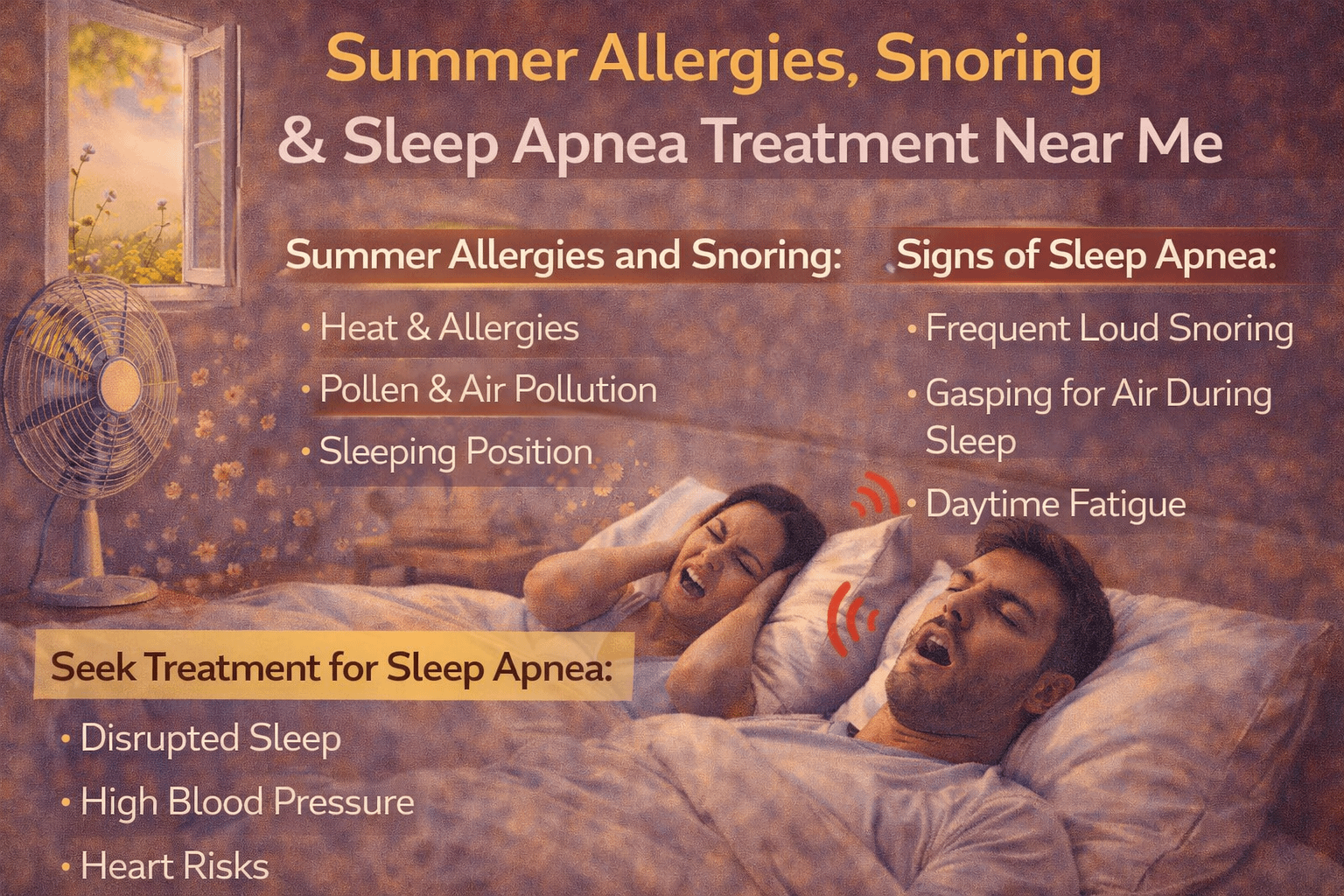
By Dr. Dixit Kumar Thakur | Consultant Pulmonologist, PulmoVista Clinics, Delhi
MBBS | MD Pulmonology | Fellowship in Sleep Medicine & Respiratory Critical Care
Every April and May, something predictable happens at PulmoVista Clinics. The waiting room fills up with patients who all say some version of the same thing: “Doctor, I do not know what is going on — I cannot breathe properly at night, my partner says my snoring has become unbearable, and I am exhausted no matter how much I sleep. Is it the heat? Is it the dust? I just do not feel like myself.”
The honest answer — the one I give sitting across from my patients — is that it is probably all three, and more. Delhi’s summer is not just a season of heat and dust. For millions of people with allergic rhinitis, it is the season their airways silently wage war against them. And for a large number of those patients, this airway inflammation is the hidden trigger behind worsening snoring, disrupted sleep, and in many cases, undiagnosed obstructive sleep apnea.
In this piece, I want to walk you through the connection between summer allergies and sleep-disordered breathing — not as a medical lecture, but as a conversation I would have with any patient sitting in front of me at our snoring and sleep disorder clinic.
First, Let’s Talk About What Summer Allergies Actually Do to Your Airways
Allergic rhinitis — what most people simply call hay fever or dust allergy — is an immune overreaction to airborne triggers: pollen, mould spores, dust mites, and in Delhi’s case, the spectacularly unhelpful combination of all of them at once, amplified by heat.
When you inhale an allergen, your immune system releases histamine and other inflammatory chemicals. These cause the lining of your nasal passages to swell, produce excess mucus, and become intensely irritated. Your nose blocks up. You start breathing through your mouth — which feels like a small inconvenience during the day, but at night, it becomes the beginning of a much bigger problem.
Here is what I explain to my patients: your nose is a remarkably sophisticated organ. It warms, filters, and humidifies air before it reaches your lungs. When you bypass your nose and breathe through your mouth — as nearly everyone with blocked sinuses does during sleep — raw, dry, unfiltered air hits your throat directly. The soft tissues of the throat vibrate. That vibration is snoring. And when those same soft tissues relax too much and collapse completely, that is obstructive sleep apnea.
The Allergy-Snoring-Sleep Apnea Chain: How One Triggers the Next
This is the part of the consultation I find most patients find genuinely surprising. They came in thinking their allergy and their snoring were two separate problems. They leave understanding they are almost certainly the same problem, expressed in two different ways.
The chain works like this:
- Summer allergens (pollen, dust, mould) enter the nasal passages and trigger inflammation
- Nasal lining swells, mucus production increases, and nasal airflow drops significantly
- The brain detects reduced nasal airflow and shifts to mouth breathing during sleep
- Mouth breathing dries and irritates the throat, increasing tissue vibration (snoring)
- Chronic inflammation extends from the nose downward into the pharynx, further narrowing the airway
- The narrowed, inflamed pharyngeal airway is now far more prone to complete collapse during sleep
- This collapse causes breathing pauses — the defining feature of obstructive sleep apnea
- The brain triggers micro-arousals to resume breathing, fragmenting sleep through the night
Studies show that patients with allergic rhinitis are nearly three times more likely to develop obstructive sleep apnea than those without nasal allergy. In my practice, I see this link every single summer — and yet it is almost never the reason patients are initially referred for evaluation.— Dr. Dixit Kumar Thakur, PulmoVista Clinics
“But Doctor, I Have Had Allergies for Years and Never Snored” — I Hear This Often
This is a fair point, and one I take seriously. Not everyone with allergic rhinitis will develop snoring or sleep apnea. There are several reasons why some patients cross that line and others do not — and understanding these factors is exactly what we assess at our snoring and sleep disorder clinic.
The risk of allergy-triggered sleep apnea increases significantly when any of the following are also present:
- Weight gain
Excess weight — particularly around the neck and throat — reduces the structural support of the upper airway. Even 5–7 kilograms of additional weight can tip someone with mild allergy-related congestion into clinically significant sleep apnea.
- Age over 40
Pharyngeal muscle tone naturally decreases with age. The same degree of nasal congestion that caused mild snoring at 30 can cause obstructive apnea at 45.
- Male anatomy
Men have longer pharyngeal airways, making them anatomically more susceptible to collapse — particularly when airway resistance is already elevated by nasal congestion.
- Menopause in women
Post-menopausal women lose the protective effect of progesterone on upper airway muscle tone, which significantly increases OSA risk — especially when combined with seasonal allergy.
- Existing nasal structural issues
A deviated nasal septum, enlarged turbinates, or nasal polyps dramatically worsen the effect of allergic swelling on nasal airflow — these patients often reach the threshold for sleep apnea quickly during allergy season.
- Alcohol consumption
Even one or two drinks in the evening relaxes pharyngeal muscles enough to convert simple snoring into apnea events in a congested, inflammation-narrowed airway.
How Do You Know If Your Snoring Has Become Sleep Apnea? Signs to Watch For
One of the challenges with sleep apnea is that most of what happens occurs while you are unconscious. Patients genuinely do not know their breathing is stopping dozens of times a night. What they do notice are the downstream effects — and these are the signals I ask every patient in our clinic to report honestly.
Take this seriously if you recognise any of these during allergy season:
- You wake up with a completely dry, sore mouth or throat — a classic sign of prolonged mouth breathing and open-mouth snoring overnight
- You feel more tired after 8 hours of sleep than after 6 — this counterintuitive pattern is very characteristic of fragmented sleep from apnea events
- Your partner reports that your snoring is not steady — it builds, goes silent for several seconds, then you suddenly gasp or snort awake
- You wake with headaches that ease during the morning — caused by overnight CO2 buildup when breathing is repeatedly interrupted
- You feel sharp mental fog, forgetfulness, or difficulty concentrating — cognitive symptoms of chronic sleep oxygen deprivation
- You feel an intense need to nap during the day even on days when you did not have a noticeably bad night
- Your allergy treatment (antihistamines, nasal spray) has helped your daytime symptoms but your sleep still feels terrible
That last point is one I want to emphasise. Many patients with allergy-triggered sleep apnea have already been treated for their rhinitis by a general physician or ENT — and they feel better during the day. But their sleep remains poor because the allergic inflammation has set off a sleep apnea cycle that does not fully resolve just by treating the allergy. At that stage, the sleep disorder needs its own evaluation and treatment.
What We Do at PulmoVista Clinics When Allergy Meets Sleep Apnea
This is an area where I believe PulmoVista Clinics offers something genuinely different. Most patients with this presentation — allergic rhinitis plus snoring plus poor sleep — end up bouncing between an allergist, an ENT, and sometimes a cardiologist, without anyone connecting the dots. What they actually need is a pulmonologist with a specific interest in sleep medicine who can see the whole picture at once.
At our snoring and sleep disorder clinic in Delhi, here is how we approach this combined presentation:
Step 1: Understand the full clinical picture
The consultation starts with a thorough history — not just your sleep symptoms, but your allergy history, what triggers it, how it changes seasonally, what medications you have tried, and how well they have worked. I also want to know about your sleep architecture: when you snore worst, how often you wake, whether your partner has ever observed you stop breathing. This context is everything.
Step 2: Treat the allergy aggressively — not gently
In patients where allergy is clearly contributing to their sleep symptoms, I do not take a wait-and-see approach to rhinitis. I prescribe intranasal corticosteroid sprays, appropriate antihistamines, and where needed, refer for allergy testing and immunotherapy assessment. Reducing nasal inflammation is the first and often most impactful intervention — and I have seen patients whose snoring reduced significantly within two weeks of starting proper nasal treatment.
Step 3: Conduct a formal sleep evaluation
I do not assume that treating the allergy will fix the sleep apnea — because in many cases it will not, especially in patients with multiple risk factors. I recommend a sleep study (home-based or in-lab polysomnography) to objectively quantify what is happening at night. The AHI number tells us whether we are dealing with simple snoring, mild OSA, or something that carries meaningful cardiovascular risk.
Step 4: Layer the treatment — allergy control plus sleep apnea therapy
For patients with confirmed OSA, we initiate CPAP or BiPAP therapy alongside continued allergy management. The two treatments work synergistically — better nasal airflow reduces the pressure required from CPAP, improves mask comfort, and increases long-term adherence. I also build in lifestyle recommendations specific to each patient: positional therapy for positional apnea, weight management support where relevant, and clear guidance on summer-specific triggers to avoid.
Asthma Medications, Allergies and Sleep — A Triangle Worth Knowing About
A significant number of patients who visit PulmoVista Clinics with allergy-related sleep problems also have asthma, or have a history of it. This is not a coincidence — allergic rhinitis, asthma, and sleep apnea form what researchers call a “united airway” triad. They share the same inflammatory pathways and very commonly co-exist.
For these patients, asthma medications — particularly inhaled corticosteroids and long-acting bronchodilators — play a critical role in reducing overall airway inflammation, which in turn improves sleep quality. However, I always review patients’ asthma medication regimens carefully in the context of sleep symptoms, because some older antihistamines used for allergy can cause sedation that actually worsens sleep apnea by over-relaxing pharyngeal muscles.
Getting the medication balance right in these triple-overlap patients requires specialist input. It is one of the areas where seeing a pulmonologist with sleep medicine training — rather than managing each condition separately — makes a measurable difference to outcomes.
Things You Can Do Right Now to Sleep Better This Summer
While you are waiting for your consultation, or if your symptoms are mild, here are the things I consistently recommend to patients managing allergy-related snoring:
- Start a nasal saline rinse (jal neti or neti pot) every evening before bed — it physically clears allergens and reduces mucosal swelling without any side effects
- Use your prescribed intranasal steroid spray consistently every morning — it takes 2 weeks to reach full effect and many patients stop too soon
- Keep bedroom windows closed at night, especially between 5am–10am when pollen counts in Delhi peak
- Change your pillowcase every 2 days during peak allergy season — dust mite allergens accumulate rapidly in warm weather
- Elevate the head of your bed by 10–15 cm using bed risers — this reduces nasal congestion by improving venous drainage from the head
- Avoid antihistamines that cause drowsiness (like chlorpheniramine) and ask your doctor about second-generation antihistamines that do not worsen airway muscle relaxation
- Keep your bedroom temperature below 24°C — a cooler room directly improves sleep depth and reduces mouth breathing
- Stop alcohol completely within 3 hours of sleep during allergy season — the combination of inflamed airways and alcohol-relaxed throat muscles is a reliable recipe for a terrible night
When to Stop Managing and Start Investigating
Self-management has its limits. There comes a point — and I want to be clear about where that point is — when snoring and allergy symptoms require proper investigation rather than another trip to the chemist.
Please book a consultation at PulmoVista Clinics if:
- Your snoring has persisted or worsened despite treating your nasal allergy
- You or your partner have noticed breathing pauses, gasping, or choking at night
- You have been waking unrefreshed for more than 3–4 weeks during allergy season
- You feel unsafe driving due to daytime sleepiness — this is a medical emergency
- You have high blood pressure, diabetes, or a history of heart disease — OSA significantly worsens all three
- You have tried CPAP therapy before but struggled with it — mask issues, pressure comfort, and adherence problems are all addressable with specialist support
- You are pregnant and experiencing snoring for the first time — pregnancy rhinitis plus sleep apnea carries specific risks that need monitoring
The Connection Is Real — and So Is the Treatment
I have been practising pulmonology and sleep medicine in Delhi long enough to say with confidence that summer allergies and sleep apnea are far more connected than most patients — and many doctors — realise. The good news is that this connection also means the treatment pathway is clearer than it looks from the outside: treat the allergy properly, investigate the sleep properly, and manage both together.
At PulmoVista Clinics, we have the diagnostic tools, the clinical experience, and the time to actually sit with you and understand what is happening. We are not interested in a five-minute consultation and a repeat prescription. We want to find the root cause — whether that is allergic rhinitis, structural nasal issues, obesity, sleep apnea, or all of the above — and build a treatment plan around you as a person, not just a symptom.
If this summer has been your worst sleep yet, it is not something to push through and endure. Come and see us. Your lungs — and your sleep — deserve better.
FAQs-Summer Allergies, Snoring & Sleep Apnea Treatment
- Can summer allergies really cause sleep apnea?
Yes. Allergic rhinitis causes nasal passage swelling that forces mouth breathing during sleep. This dries and irritates the throat, narrows the upper airway, and dramatically increases the risk of airway collapse — the defining feature of obstructive sleep apnea. Dr. Dixit Kumar Thakur at PulmoVista Clinics sees a clear surge in allergy-triggered sleep apnea cases every summer in Delhi.
- What is the connection between allergic rhinitis and snoring?
Allergic rhinitis blocks the nasal passages, forcing you to breathe through your mouth during sleep. Mouth breathing bypasses the nose's natural filtration and humidification, causing the soft tissues of the throat to vibrate — which produces snoring. Chronic nasal inflammation from allergies also extends into the pharynx, narrowing the airway further and worsening snoring over time.
- How do I know if my allergy-related snoring has become sleep apnea?
Key warning signs include waking up unrefreshed despite a full night's sleep, morning headaches, extreme daytime sleepiness, dry or sore throat on waking, and a partner reporting witnessed breathing pauses or gasping. If your allergy treatment has improved your daytime symptoms but your sleep still feels terrible, you likely need a formal sleep apnea evaluation — not just better allergy medicine.
- What is a snoring and sleep disorder clinic and what happens there?
A snoring and sleep disorder clinic like PulmoVista Clinics in Delhi offers complete diagnosis and treatment for snoring, obstructive sleep apnea, and allergy-related sleep disorders. Dr. Dixit Kumar Thakur conducts a detailed clinical assessment, sleep questionnaires, and arranges a home sleep study or in-lab polysomnography to objectively measure sleep quality and breathing patterns.
- Does treating my allergy fix my sleep apnea?
Treating allergic rhinitis aggressively — with nasal corticosteroid sprays, appropriate antihistamines, and allergen avoidance — is an important first step and can reduce snoring significantly in some patients. However, once sleep apnea is established, it usually requires its own treatment such as CPAP therapy alongside allergy management. Dr. Dixit Kumar Thakur at PulmoVista Clinics evaluates both conditions together for the best outcome.