
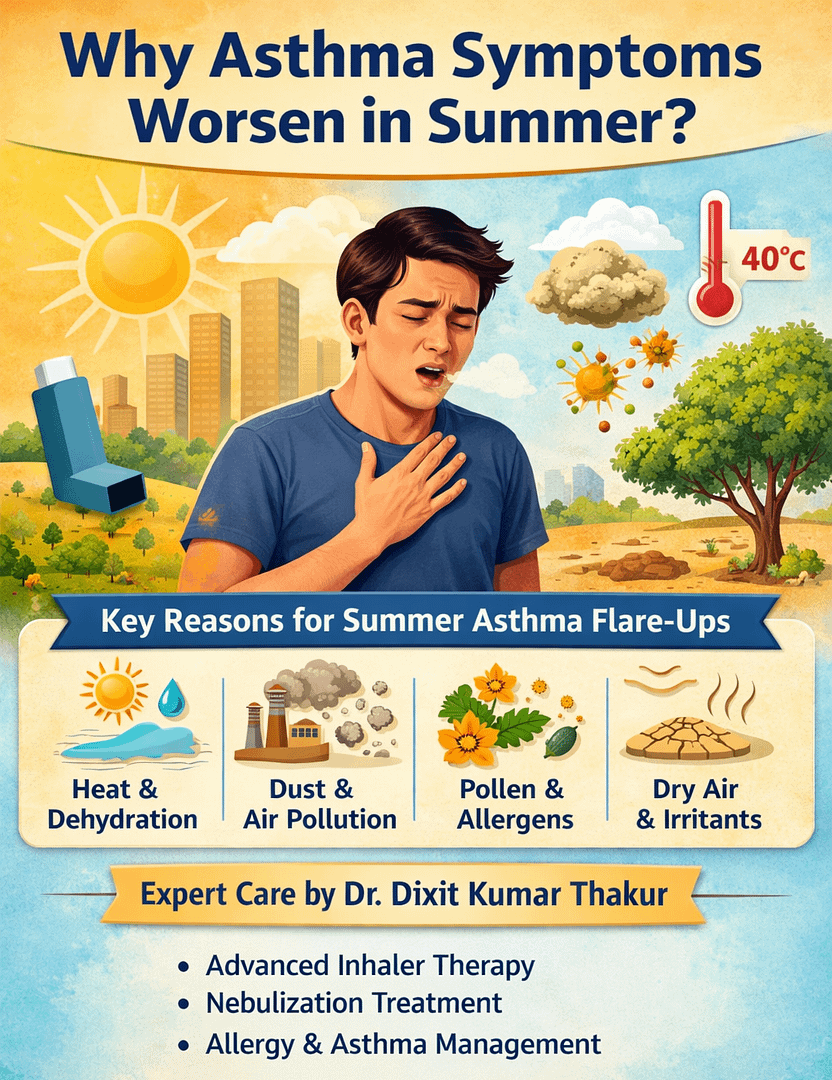
Expert Care by Dr. Dixit Kumar Thakur
Respiratory Disease Specialist | Pulmovista Clinics
Introduction
Asthma is a chronic respiratory condition that affects millions of people worldwide. While many patients associate asthma flare-ups with winter pollution, summer can also be a challenging season for individuals with asthma—especially in cities like Delhi.
Hot temperatures, dust storms, pollen, and poor air quality can trigger airway inflammation and worsen breathing symptoms. Patients often report increased coughing, wheezing, and shortness of breath during the summer months.
At Pulmovista Clinics, Dr. Dixit Kumar Thakur, a respiratory disease specialist in South Delhi, frequently treats patients experiencing seasonal asthma flare-ups. With proper diagnosis, preventive care, and access to the Best Asthma Treatment in Delhi, patients can effectively manage symptoms and maintain healthy breathing throughout the summer season.
Understanding Asthma and Its Triggers
Asthma occurs when the airways become inflamed and narrow, making it difficult for air to move in and out of the lungs. The condition can be triggered by environmental factors, infections, allergens, or air pollution.
Common asthma symptoms include:
- Wheezing or whistling sound while breathing
- Persistent coughing
- Chest tightness
- Shortness of breath
- Difficulty breathing during physical activity
Seasonal changes often increase exposure to asthma triggers, which is why symptoms may worsen during certain times of the year.
Why Asthma Symptoms Worsen in Summer
1. Dust and Dry Winds
Delhi summers often bring dry winds and dust storms. Dust particles irritate the respiratory tract and trigger inflammation in sensitive airways.
Patients with asthma may experience sudden coughing, wheezing, or breathlessness when exposed to dusty environments.
2. Increased Pollen Levels
During summer, plants and grasses release pollen into the air. For individuals with allergic asthma, pollen exposure can trigger allergic reactions that worsen breathing symptoms.
Common allergy-related symptoms include sneezing, nasal congestion, itchy eyes, and coughing.
3. High Temperature and Heat
Hot weather can make breathing uncomfortable for some asthma patients. Heat may cause airway irritation and dehydration, which can thicken mucus in the respiratory tract.
Thick mucus can block airways and make breathing more difficult.
4. Indoor Air Pollution
Many people spend more time indoors during extreme heat. Poorly maintained air conditioners can circulate dust, mold spores, and allergens.
These indoor triggers can worsen asthma symptoms even when patients remain inside.
5. Increased Air Pollution
Delhi’s air quality can fluctuate during summer due to construction dust, vehicle emissions, and environmental pollutants. Poor air quality can irritate the lungs and trigger asthma attacks.
Patients with pre-existing respiratory conditions are particularly sensitive to these pollutants.
Common Summer Asthma Symptoms
Asthma symptoms during summer may include:
- Persistent dry cough
- Wheezing during breathing
- Chest tightness
- Breathlessness after mild activity
- Frequent use of rescue inhalers
If symptoms become frequent or severe, it is important to consult a respiratory specialist.
Importance of Early Diagnosis
Early diagnosis and monitoring help prevent severe asthma attacks. At Pulmovista Clinics, patients receive comprehensive respiratory evaluation to determine asthma severity and triggers.
Diagnostic tests may include:
- Lung function tests
- Pulmonary function tests (PFT)
- Oxygen saturation monitoring
- Allergy assessment if required
These evaluations help create a personalised asthma treatment plan.
Best Asthma Treatment in Delhi: What Patients Should Expect
Asthma cannot be permanently cured, but it can be controlled effectively with proper medical care.
At Pulmovista Clinics, asthma management focuses on long-term control and prevention of flare-ups.
1. Inhaler Therapy
Inhalers deliver medication directly to the lungs and are the most effective treatment for asthma.
Two types are commonly used:
- Preventive inhalers to reduce airway inflammation
- Rescue inhalers for quick relief during asthma attacks
2. Nebulization Therapy
For patients experiencing severe breathing difficulty, nebulization may be recommended. This treatment converts medication into a mist that is inhaled into the lungs.
3. Allergy Management
Many asthma patients have allergic triggers. Identifying allergens such as dust or pollen helps reduce exposure and prevent flare-ups.
4. Lifestyle and Environmental Control
Avoiding triggers is an important part of asthma management. Patients are advised to maintain clean indoor air and reduce exposure to pollutants.
Summer Asthma Prevention Tips
Simple lifestyle changes can help prevent asthma attacks during summer.
Stay Hydrated
Drink plenty of water to keep airways moist and prevent thick mucus formation.
Avoid Dust Exposure
Wear masks in dusty environments and avoid outdoor activity during dust storms.
Maintain Indoor Air Quality
Regularly clean air conditioners and use air purifiers to reduce allergens.
Continue Asthma Medications
Never stop prescribed asthma medications without consulting a doctor.
Monitor Symptoms
Seek medical attention if symptoms worsen or become frequent.
When to Visit a Pulmonologist
Asthma symptoms should not be ignored. You should consult a specialist if you experience:
- Frequent coughing or wheezing
- Severe breathlessness
- Chest tightness not relieved by inhalers
- Asthma attacks triggered by weather changes
- Difficulty sleeping due to breathing problems
Early consultation with an experienced pulmonologist ensures timely treatment and prevents complications.
Asthma Care at Pulmovista Clinics
At Pulmovista Clinics, Dr. Dixit Kumar Thakur provides comprehensive respiratory care for asthma patients.
The clinic offers:
- Advanced respiratory evaluation
- Personalised asthma treatment plans
- Lung function testing
- Allergy-related asthma management
- Long-term respiratory care and follow-up
This patient-focused approach helps individuals achieve better asthma control and improved quality of life.
Conclusion
Summer can be a challenging season for asthma patients due to heat, dust, pollen, and pollution. These environmental factors can trigger airway inflammation and worsen breathing symptoms.
However, with proper medical care and preventive strategies, asthma can be effectively controlled. Access to the Best Asthma Treatment in Delhi ensures that patients receive timely diagnosis, personalised treatment, and long-term respiratory care.
Under the expert guidance of Dr. Dixit Kumar Thakur at Pulmovista Clinics, patients can manage asthma symptoms effectively and maintain healthy breathing even during Delhi’s intense summer months.
FAQs-Why Asthma Worsens in Summer
- Why do asthma symptoms worsen during summer?
Summer triggers such as dust storms, pollen, heat, and air pollution can irritate the airways and worsen asthma symptoms like coughing, wheezing, and breathlessness.
- Can hot weather trigger asthma attacks?
Yes. High temperatures and dry air can irritate the respiratory tract, leading to inflammation and breathing difficulty in asthma patients.
- What are the common symptoms of asthma flare-ups in summer?
Common symptoms include persistent cough, wheezing, chest tightness, shortness of breath, and increased use of inhalers.
- How can asthma patients prevent attacks during summer?
Patients should avoid dust exposure, stay hydrated, maintain clean indoor air, follow prescribed medications, and consult a pulmonologist if symptoms worsen.
- When should I see a pulmonologist for asthma?
You should consult a specialist if you experience frequent asthma attacks, severe breathlessness, or symptoms that do not improve with regular medication.
- Where can patients get expert asthma treatment in Delhi?
Patients can consult Dr. Dixit Kumar Thakur at Pulmovista Clinics for advanced asthma diagnosis and personalised treatment.